SHIELDGUARD LEARN: NFT SCAM PREVENTION GUIDE
Topic: The Evolving Threat Landscape in NFTs: From Rug Pulls to Wallet Drainers
The NFT market remains a hotbed for innovation, but the anonymity and rapid transaction speed of blockchain technology also make it a primary target for sophisticated scams. Recent threats show a clear shift from simple rug pulls to highly advanced wallet drainer malware and complex social engineering schemes. User vigilance and technical security are more critical than ever.
Latest NFT Scam Tactics (2024–2025)
The most prominent threats to NFT investors today center on deceiving users into signing malicious transactions or installing malware.
1. Wallet Drainers (Malicious Smart Contracts)
This is the most dangerous and rapidly growing threat.
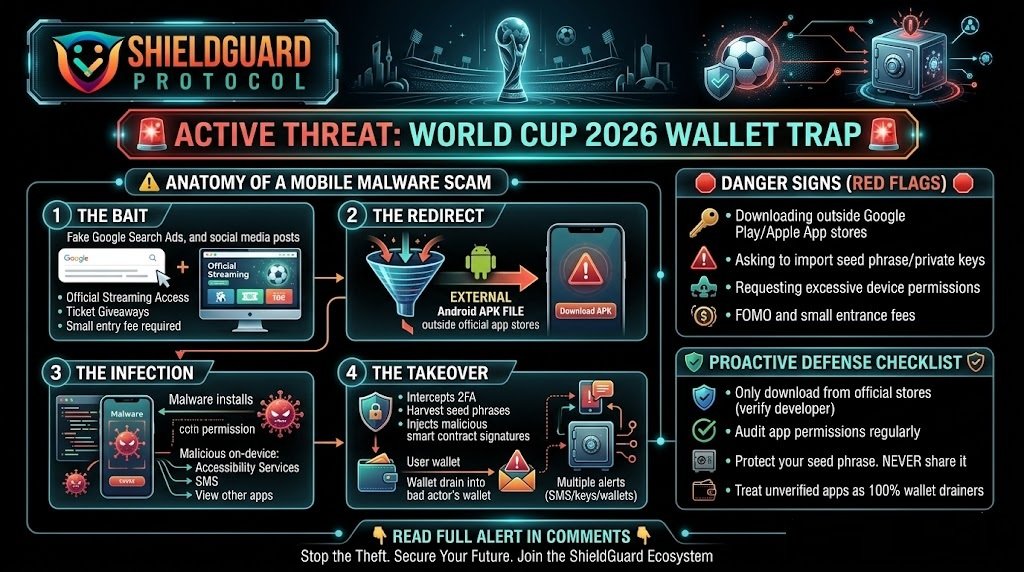
- How it Works: Attackers create phishing websites, often impersonating legitimate marketplaces or new NFT minting sites. These sites trick users into connecting their wallet and approving a transaction (often disguised as a free mint or a simple contract interaction). The underlying smart contract, known as a drainware or crypto drainer, then gains unauthorized access to all assets (NFTs, ETH, tokens) in the victim’s wallet and drains them to the attacker’s address.
- Vector: Phishing ads, compromised social media accounts (Discord, Telegram, X), fake airdrops, and malicious browser extensions are common ways these links are distributed.
2. Sophisticated Social Engineering & Malware
Scammers are leveraging AI and deepfake technology for high-level impersonation.
- Fake Project Startups: Elaborate schemes now involve creating fake companies (AI, Web3, gaming, social network) with spoofed social media accounts and project documentation hosted on legitimate platforms like Notion or GitHub. A “fake employee” contacts a victim, asking them to test software or a game in exchange for crypto payment. The downloaded binary is actually malware designed to steal credentials or private keys.
- Impersonation Phishing: Scammers pose as customer support or security personnel from major platforms (e.g., OpenSea, MetaMask, WalletConnect) via DMs or emails, often creating a false sense of urgency (e.g., “Your wallet will be suspended”) to push users toward a malicious verification link.3. NFT Rug Pulls & Exit Scams
This remains a common initial threat in new projects.
- Developer Abandonment (Soft Pull): Project creators rapidly hype up an NFT collection, sell it out, and then disappear, abandoning the roadmap and crashing the asset’s value.
- Malicious Smart Contract (Hard Pull): Developers intentionally embed code that prevents users from selling the NFT or allows the team to suddenly drain the project’s collected funds.
4. Counterfeit NFTs & Wash Trading
These tactics manipulate market value and authenticity.
- Counterfeit NFTs: Scammers plagiarize an artist’s work or create digital replicas and list them on marketplaces, misleading buyers into purchasing a valueless fake.
- Wash Trading: Traders artificially inflate an NFT’s perceived demand and value by repeatedly buying and selling it between wallets they control. This misleads potential buyers about the asset’s true market value.
ShieldGuard Security Guidelines for NFT Investment
Your primary defense lies in proactive skepticism and robust wallet hygiene.
 Wallet Security: The Multi-Wallet Philosophy
 Wallet Security: The Multi-Wallet Philosophy
- Implement Multi-Wallet Strategy: Treat your wallets like bank accounts with different risk profiles.
- Cold Wallet (Vault): Use a hardware wallet (e.g., Ledger, Trezor) for storing your most valuable, long-term NFT holdings and large cryptocurrency reserves. Never connect this wallet to a new or unverified website.
- Hot Wallet (Daily Use): Use a separate software wallet with only a small amount of “gas money” for daily trading, minting, and interaction with new dApps. Limit the funds in this wallet so that a successful drainer attack results in minimal loss.
- Protect Your Seed Phrase: Never store your seed phrase digitally (on a computer, cloud, or phone) or share it with anyone. A legitimate platform will never ask for it.
- Enable 2FA/MFA: Always use app-based two-factor authentication (2FA) or multi-factor authentication (MFA) on all exchange accounts and social media platforms tied to your crypto activity. Avoid using SMS-based 2FA.
- Due Diligence: Avoiding Scams and Rug Pulls

- Verify Source and URL: Only click on links from official, verified project websites and social media accounts. Manually type the website URL instead of clicking a link from a DM or email. Check for spelling errors or subtle changes in a URL (e.g., imitation marketplaces).
- Research the Team: Look for doxxed (publicly identified) team members with a verifiable history and credible past projects. If the team is completely anonymous with a new social media presence, this is a major red flag.
- Scrutinize the Smart Contract: Check the project’s official contract address on a blockchain explorer (e.g., Etherscan). Legitimate projects will have verified contracts. Ask the community for proof of locked liquidity to prevent hard rug pulls.
- Beware of FOMO and Pressure Tactics: Be highly cautious of any project using artificial urgency, countdown timers, or “too-good-to-be-true” offers. A legitimate project will still be around in five minutes for you to do your research.
Transaction Safety: Revoking Permissions
 Transaction Safety: Revoking Permissions
- Review Transaction Signatures: Before clicking “Approve” or “Sign,” take the Five-Minute Rule. Carefully read the transaction details. A wallet drainer often hides its true intent behind a generic “Approve” request that grants the contract unlimited spending power over your tokens and NFTs.
- Regularly Revoke Approvals: Periodically use tools (like Etherscan’s Token Approval Checker or Revoke.cash) to audit and revoke unnecessary token and NFT permissions granted to smart contracts you no longer use. Each approval is a potential backdoor for an attacker.