🛡️ ShieldGuard Learn: Scam Prevention & Education
The Betrayal of the Cold Wallet: A $3 Million Lesson in Supply Chain Risk
The story of the dedicated crypto holder who lost over $3 million worth of XRP from his supposed “cold wallet” is a chilling reminder that no defense is foolproof. The victim, Brandon, stated he followed every known rule: he kept his seed phrase safe, never took pictures, and never shared it with anyone.
Despite these precautions, an attacker was able to initiate multiple, immediate transactions to drain his entire retirement savings of over 1.2 million XRP. The funds were quickly moved to a new wallet and scattered across hundreds of wallets to prevent tracking, a technique known as “mixing.”
The key takeaway is this: The attack did not compromise the hardware; it compromised the software supply chain.
Understanding the True Vector: The Invisible Attack
When physical security is perfect, the attack vector shifts to the digital environment that interacts with the wallet. This attack highlights the extreme danger of Supply Chain Exploits.
The Likely Mechanism for the Attack:
- Software Backdoor: Attackers often target the foundational code libraries that developers use. In a highly public event around the same timeframe, the official XRPL (XRP Ledger) NPM package—a piece of code used by countless apps and websites to build wallets—was compromised.
- Private Key Exposure: The attackers inserted a backdoor into this official library. This malicious code was designed to immediately steal a user’s private key or seed phrase whenever a new
Walletobject was created or interacted with by a compromised application. - Bypassing the Cold Wallet: If the victim ever entered their seed phrase into a desktop or mobile companion application that was using the compromised library, the seed phrase—the master key—was instantly compromised and sent to the hacker, completely bypassing the cold wallet’s physical security (the Ellipal is an air-gapped device, but its initial setup or companion app interaction could be the weak link).
The attacker had the master key, allowing them to sign transactions and initiate the draining of funds at their leisure, exactly as a legitimate user would.
The ShieldGuard Protocol: 5 Rules to Defend Against Supply Chain Theft
To protect your assets from sophisticated digital theft, you must treat your digital environment with the same vigilance as your physical safe.
- Assume All Software is Compromised (Default Negative):
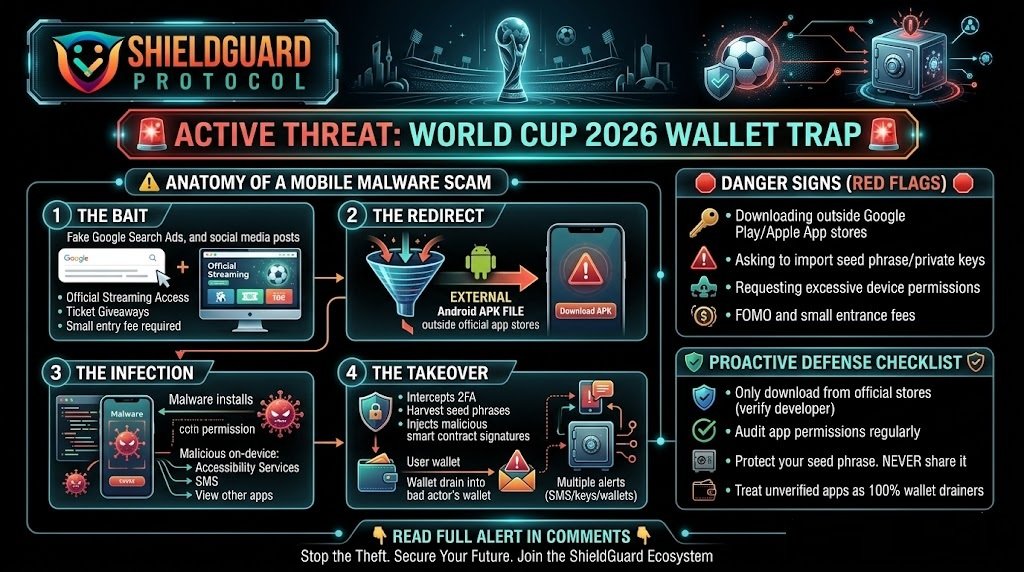
NEVER type your seed phrase into any electronic device connected to the internet unless you are absolutely certain of the application’s integrity.
Only use your hardware wallet to generate and view the seed phrase.
2. Isolate Your Wallet Environment:
Dedicate a separate, clean computer or mobile device specifically for crypto activity and nothing else. Do not use it for web browsing, emails, or social media.
Conduct your first setup and all critical interactions (like adding a passphrase) offline or in a sterile environment.
3. Audit Your Application Connections:
Be cautious when pairing your hardware wallet with third-party or even desktop wallet applications. Always ensure you are downloading the software from the official, verified website URL only.
If you must use a companion app, ensure your device’s operating system and all apps are fully updated, as patched vulnerabilities are constantly released.
4. Practice Progressive Security (The 2-Wallet Rule):
If you have a large portfolio, consider using two separate hardware wallets. Use one for your main, long-term holdings (truly cold storage) and another for active trading, connecting to DeFi, or interacting with dApps.
This limits your exposure—if the active wallet is compromised, your main stack is safe.
5. Use a BIP39 Passphrase (The 25th Word):
For the highest value assets, use the optional passphrase (the “25th word”). This word is never written down with the 12/24 word phrase, effectively creating a completely separate wallet. If your 12/24 words are physically stolen, the thief still cannot access your funds without that secret passphrase.