🚨 SMART CONTRACT EXPLOIT ALERT: The Syndicate “Commons Bridge” Breach
Category: Smart Contract Exploit / Cross-Chain Bridge Vulnerability
Threat Level: High 🔴
Target: DeFi Yield Farmers, Liquidity Providers, Bridge Users
The ShieldGuard Threat Intelligence team is issuing an urgent alert regarding a major infrastructure breach that occurred on April 29, 2026. The Syndicate protocol suffered a devastating exploit targeting its Commons Bridge.
Here is the complete intelligence breakdown of the Syndicate breach and the critical lessons for DeFi investors navigating cross-chain environments.
🔍 Threat Intelligence: Anatomy of the Exploit
Blockchain security firms, including CertiK and PeckShield, identified a severe breach targeting the Commons Bridge on the Base network.
1. The Target: Commons Bridge
The exploit specifically targeted the cross-chain infrastructure connecting the Syndicate Network. Bridges remain one of the most vulnerable attack surfaces in the Web3 ecosystem because they rely on accepting unverified cross-chain messages and sending out funds.
2. The Execution & Token Dump
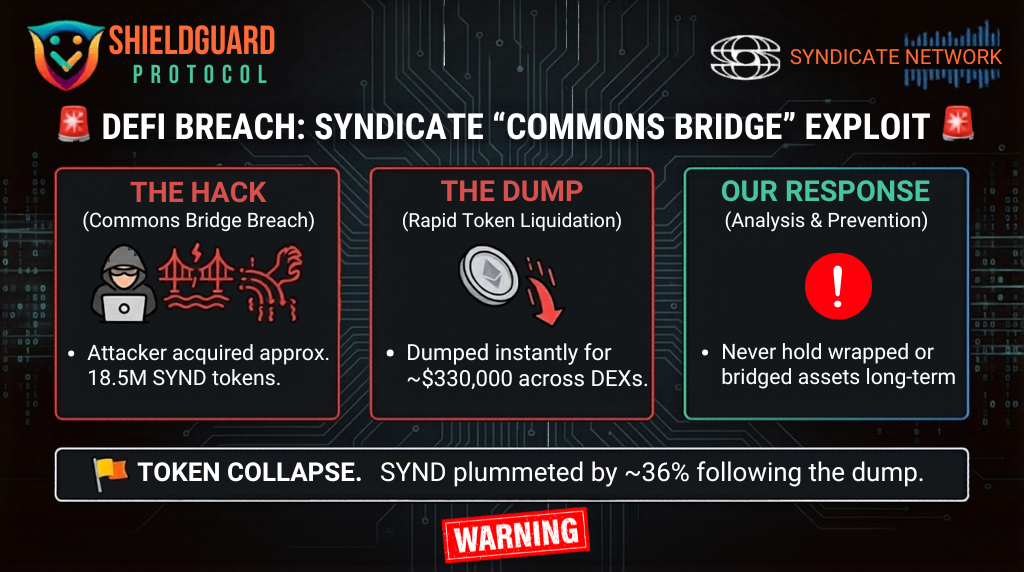
- The attacker successfully compromised the bridge, acquiring approximately 18.5 million SYND tokens.
- These stolen tokens were rapidly liquidated on the open market, netting the attacker roughly $330,000.
- Following the liquidation, the illicit funds were quickly moved across networks and bridged to Ethereum to evade immediate tracking.
3. The Market Impact: 36% Flash Crash
The sudden, massive dump of 18.5 million tokens created severe sell pressure across the market. This caused the SYND token to plummet by approximately 35% to 36% within hours. This rapid devaluation triggered widespread panic selling among liquidity providers and retail investors.
🛑 The Hard Truth: The Hidden Risk of Bridged Assets
Cross-chain bridges are convenient, but they are also concentrated points of failure. When you interact with a bridge, you are trusting the underlying smart contract to secure your assets. As we have seen with this attack, when permissions, validation, or contract controls fail, a cross-chain pathway can quickly turn from infrastructure into a critical vulnerability.
🛡️ Preventive Education: Defending Your Capital in DeFi
To survive in decentralized finance, you must assume that any smart contract can be compromised. Implement these crucial operational security (OpSec) rules:
- Do Not Hold Bridged Assets Long-Term: Treat cross-chain bridges strictly as transit routes. Move your funds, execute your trade, and immediately convert back to native assets on a secure chain.
- Monitor Protocol Security Alerts: In the event of a bridge hack, the native token often suffers a flash crash as the attacker liquidates the stolen funds. Staying updated through security firms like CertiK, PeckShield, and ShieldGuard can give you vital minutes to react.
- Diversify Your Liquidity: Never concentrate all of your capital into a single protocol or liquidity pool. If the underlying token’s contract is exploited, your position can be instantly devalued by the resulting panic selling.
💡 The ShieldGuard Verdict
The Syndicate Commons Bridge exploit is another stark reminder that smart contract risk is the greatest threat in decentralized finance. True financial sovereignty means taking responsibility for your risk exposure. Secure your private keys, diversify your liquidity, and never trust a single piece of infrastructure with your entire portfolio.
Stay Verified. Stay Shielded.