The “Fake Token” & Overpayment Refund Scam
Risk Level: Critical 
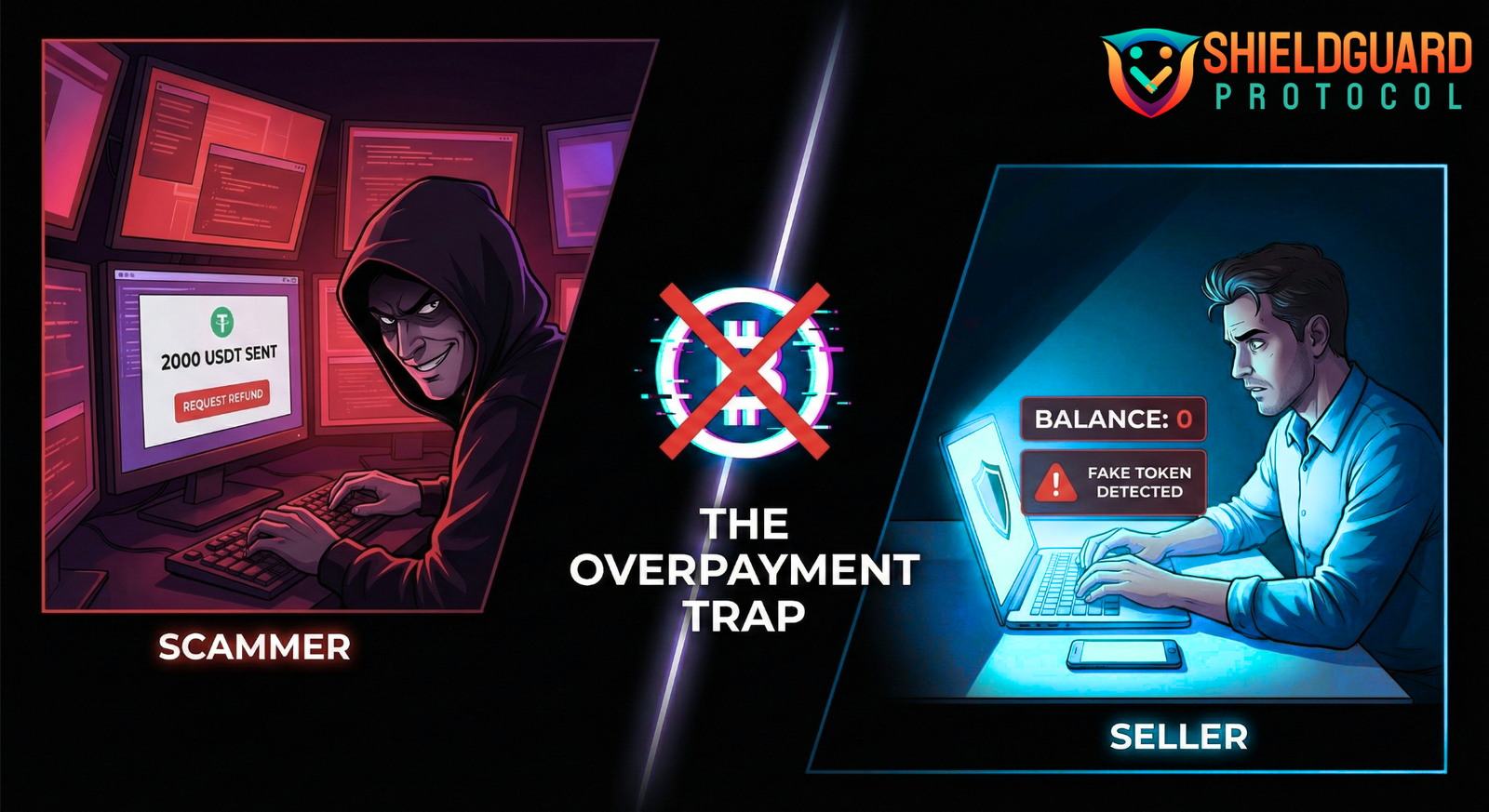
The Scenario: A freelancer, merchant, or P2P seller receives a payment notification for a purchase. The buyer claims to have “accidentally” sent a huge amount (e.g., 2000 USDT instead of 20 USDT) due to a typo. They appear panicked and immediately ask the seller to “refund” the difference to a specific wallet address.
The Mechanism (How it Works):
- The Fake Mint: The scammer creates a worthless custom token (a “Fake Token”) on the blockchain. They name this token “USDT” or “Tether” in the code, but it is not the official Tether USD.
- The History Trick: They send this fake token to your wallet. Because the token is named “USDT,” your wallet’s Transaction History log often displays: “Received 2000 USDT.”
- The Balance Reality: Your wallet’s Total Balance does not increase. This is because legitimate wallets check the Contract Address against the official Tether database. Since the address doesn’t match, the wallet knows the tokens have zero value.
- The Theft: If you agree to “refund” the difference, you are sending real, valuable USDT from your own pocket to the scammer.
 Critical Red Flags:
- History vs. Balance Mismatch: You see the transaction in your “History” or “Activity” tab, but your total portfolio value remains unchanged.
- The “Accidental” Whale: It is technically difficult to accidentally send significantly more crypto (e.g., 20x the price) because most wallets require manual confirmation of the exact digits.
- Urgency: The buyer pressures you to refund immediately (“Please send back now, it’s my rent money!”) to prevent you from investigating.
 ShieldGuard Defense Protocol:
- The Contract Verification (Mandatory):
Guideline: Never trust the name of a token. Always check its Contract Address.Action: Click the transaction details in your wallet or view it on a Block Explorer (Etherscan/Tronscan).
Compare with Official Addresses:
Real USDT (TRC20): TR7NHqjeKQxGTCi8q8ZY4pL8otSzgjLj6t
Real USDT (ERC20): 0xdac17f958d2ee523a2206206994597c13d831ec7
If the contract address does not match these exactly, it is a fake token.
1.The “Swap Test”:
Guideline: If you can’t swap it, it’s not real.
Action: Try to initiate a swap of 1 USDT for ETH/TRX inside your wallet. If the “Available Balance” for the swap is 0 (despite the history showing 2000), the funds are fake.
2.The Isolation Rule:
Guideline: Don’t mix business with savings.
Action: For online sales or freelance work, generate a fresh wallet address for every new client. This prevents scammers from seeing your main holdings and targeting you.
Verdict: If a buyer overpays and asks for a refund, Wait 60 Minutes. Check your spendable balance. If the funds are not spendable, block the user immediately.