The Bitcoin ATM “Safety” Trap: How to Spot the Scam
Bitcoin ATMs (BTMs) have surged in popularity, offering a convenient way to buy and send cryptocurrency. However, they have also become a preferred tool for criminals. A specific and devastating scam has emerged where fraudsters manipulate victims into believing that depositing their cash into a Bitcoin ATM is the only way to “protect” their money.
ShieldGuard Protocol is issuing this critical alert to help you recognize and stop this fraud in its tracks.
1. The Anatomy of the Scam
This scam relies on impersonation and urgency. It typically follows a predictable script:
- The Initial Contact: You receive a call, text, or email from someone claiming to be from a trusted organization—your bank, Amazon, Microsoft, or a government agency like the FBI or IRS.
- The False Alarm: They claim your account has been “compromised,” “hacked,” or is involved in “illicit activity.” They insist your funds are unsafe in your current bank account.
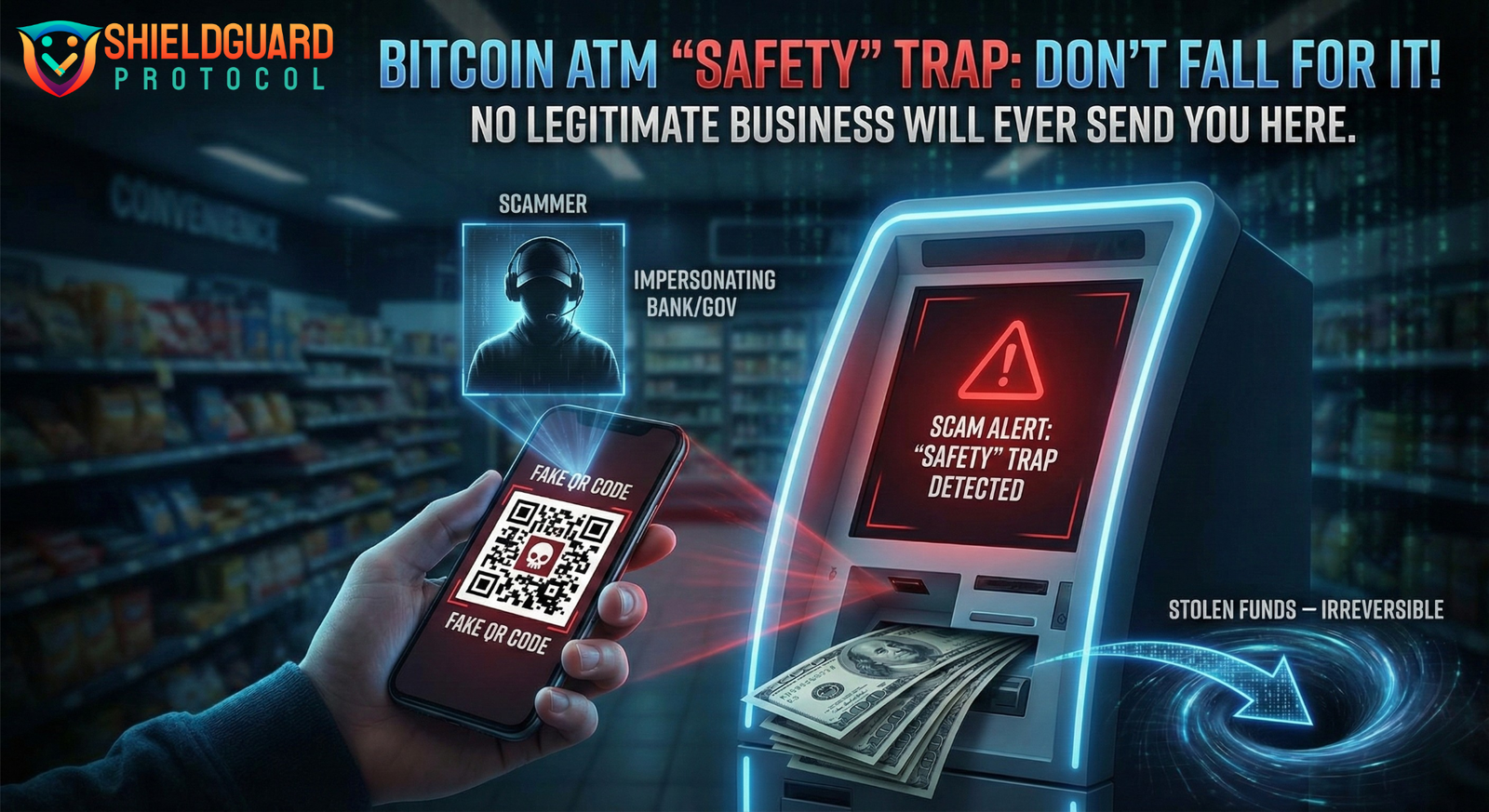
- The “Safety” Solution: To “protect” your savings, they instruct you to withdraw cash immediately and deposit it into a “secure government kiosk” or a “federal safety locker.” In reality, they are directing you to a Bitcoin ATM.
- The Execution: Once at the machine, they instruct you to feed your cash into it. They will provide a QR Code for you to scan. They claim this code links to your new “secure account.”
The Truth: That QR code is the scammer’s personal crypto wallet address. The moment you scan it and insert cash, the machine converts your money into Bitcoin and sends it directly to them. It is instant and irreversible.
2. Why Scammers Love Bitcoin ATMs
Criminals favor Bitcoin ATMs for specific reasons that make them dangerous for the uninformed user:
- Irreversibility: Unlike a bank wire or credit card charge, blockchain transactions cannot be reversed. Once you send the crypto, it is gone forever.
- Speed: Cash goes in, and Bitcoin goes out instantly. There is no “pending” period for a bank teller to intervene or flag the fraud.
- Anonymity: Scammers can operate from anywhere in the world while you stand at a kiosk in your local convenience store.
- Lack of Guardrails: While a bank teller might ask questions if you try to withdraw a large sum of cash, a kiosk often has no human supervision to warn you (though regulations are beginning to improve).
3. The Hidden Cost: Massive Fees
Beyond the theft itself, victims are often hit with a secondary financial blow.
- Exorbitant Fees: Bitcoin ATMs are notorious for charging extremely high transaction fees, sometimes ranging from 15% to 25% or more.
- The Double Loss: Victims lose money twice: first to the scammer who steals the deposit, and second to the machine operator who takes a massive cut of the cash inserted.
🛡️ ShieldGuard Defense Guidelines
Rule #1: No Legitimate Business Will Ever Direct You to a Bitcoin ATM.
- Red Flag: If “Amazon,” “Microsoft,” your “Bank,” or the “Government” calls you and tells you to go to a kiosk to pay a bill or secure funds, IT IS A SCAM. Hang up immediately.
- Why: Legitimate entities use invoices, checks, or online portals. They never use Bitcoin kiosks for payments or “safety.”
Rule #2: The “QR Code” Trap
- Mechanism: Scammers will text you a QR code to scan at the machine.
- Reality: That QR code is their wallet address. Scanning it tells the machine to send your money to their account. Never scan a QR code provided by someone over the phone.
Rule #3: Beware of Urgency
- Tactic: Scammers often keep you on the phone the entire time to prevent you from thinking clearly or asking a bystander for help.
- Defense: If someone demands you stay on the line while handling money, hang up. Call your bank using the official number on the back of your debit card to verify any claims.
Rule #4: Stop and Ask
- Action: If you are ever at a Bitcoin ATM because someone on the phone told you to be there, STOP. Do not insert any cash. Leave the machine and contact a trusted family member or local authorities immediately.
ShieldGuard Learn: Building a fortress of knowledge to protect your financial future.