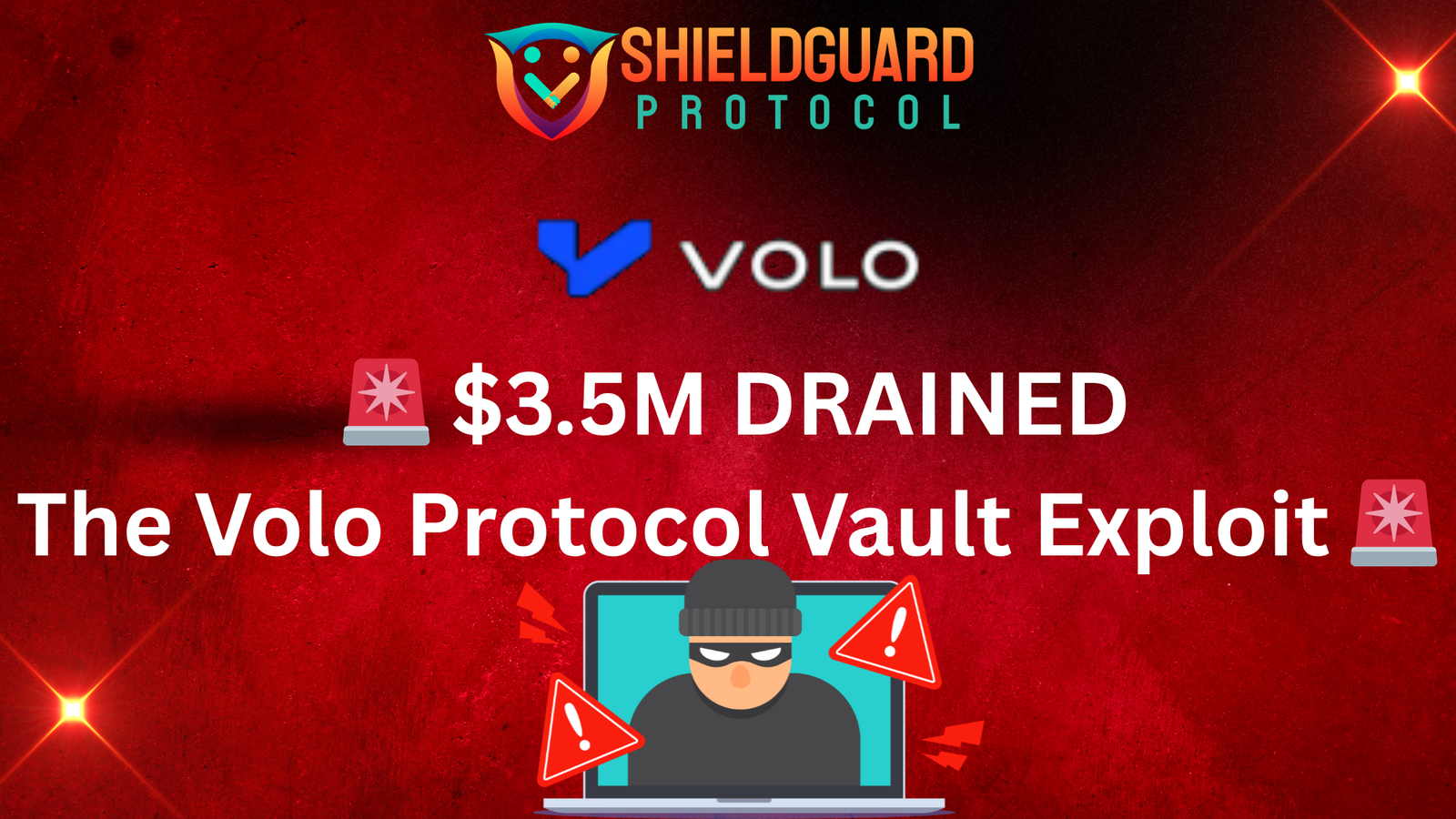
🚨 SECURITY ALERT: $3.5M DRAINED – The Volo Protocol Vault Exploit
Category: Smart Contract Vulnerability / DeFi Exploit
Threat Level: High 🔴
Target: Volo Protocol (Sui Network Ecosystem)
In the relentless landscape of decentralized finance, even the most promising yield strategies can become targets overnight. Earlier today, Volo Protocol—a prominent decentralized platform operating on the Sui network—suffered a targeted exploit that drained approximately $3.5 million in user assets.
While the headline is alarming, the handling of this incident provides a critical case study in crisis management and smart contract isolation. Here is the complete ShieldGuard Threat Intelligence breakdown of the Volo Protocol exploit and the crucial lessons every investor must learn.
🔍 Threat Intelligence: Fact Study of the Exploit
Based on the official incident response and on-chain forensics, here are the verified facts of the breach:
1. The Target and The Loss
The attacker successfully exploited a vulnerability isolated to three specific Volo Vaults. They managed to siphon approximately $3.5 million in liquidity, specifically draining Wrapped Bitcoin (WBTC), XAUm (a tokenized gold derivative), and USDC.
2. The Containment Strategy
Upon detecting the unauthorized asset removal, the Volo team executed a rapid incident response:
- Triggered an emergency freeze on all active Vaults to halt further withdrawals.
- Alerted the Sui Foundation and ecosystem security partners to track the stolen assets.
- Confirmed that the ~$28 million in Total Value Locked (TVL) spread across their other vaults remains secure, as the vulnerability was not a shared, protocol-wide flaw.
3. The Remediation (A Rare Web3 Move)
In a space where “hacked” usually means “gone forever,” Volo has publicly committed to absorbing the $3.5 million loss through their own treasury. They are actively working with on-chain investigators to recover the funds, but they have pledged to protect their users from bearing the financial brunt of this smart contract failure.
🛡️ Preventive Education: Surviving the “Vault” Ecosystem
The Volo incident highlights a stark reality: when you deposit funds into a DeFi vault, you are trusting lines of code, not a bank vault. Even if the project promises a refund, your liquidity is frozen, and you are at the mercy of their treasury reserves.
To navigate these ecosystems safely, integrate these OpSec rules into your strategy:
1. Understand Compartmentalization in DeFi
The saving grace of the Volo exploit was that the vulnerability was isolated to three specific vaults, sparing the remaining $28 million. When depositing into DeFi, understand that different liquidity pools and vaults run on entirely different smart contracts. Do not blindly assume that because a protocol’s primary staking pool is audited and safe, their experimental or newly launched vaults are equally secure.
2. Never Treat DeFi Like a Savings Account
Even legitimate platforms can suffer from zero-day exploits. The fact that Volo is stepping up to absorb the loss is highly commendable, but it is the exception, not the rule. In 90% of DeFi hacks, the treasury cannot cover the losses, and users are left with nothing. Only allocate a percentage of your portfolio to yield-generating smart contracts that you are prepared to risk.
3. Monitor Emergency Communication Channels
In Web3, minutes matter. The Volo team froze their vaults quickly, preventing a wider contagion. As an investor, you must have notifications turned on for the official X (Twitter) accounts and Discord announcement channels of every protocol holding your funds. If a hack begins, you need to know immediately so you can attempt to withdraw from unaffected pools before the protocol hits the emergency freeze button.
4. The “Refund” Risk
While Volo has promised remediation, users in the affected pools are currently facing frozen assets and zero liquidity. Until a post-mortem is published and a refund mechanism is deployed, those funds are completely inaccessible. Never put your daily operational capital into complex yield vaults.
💡 The ShieldGuard Verdict
The Volo Protocol exploit is a dual-sided lesson. On one hand, it exposes the ever-present dangers of smart contract vulnerabilities. On the other hand, Volo’s immediate transparency, rapid containment, and willingness to absorb the loss set a strong benchmark for how Web3 founders should handle a crisis.
However, security should never rely on the goodwill of a protocol’s treasury. True protection starts with your own risk management. Diversify your allocations, stay informed through the ShieldGuard Learn hub, and build an unshakeable foundation of personal operational security.
Stay Verified. Stay Shielded.