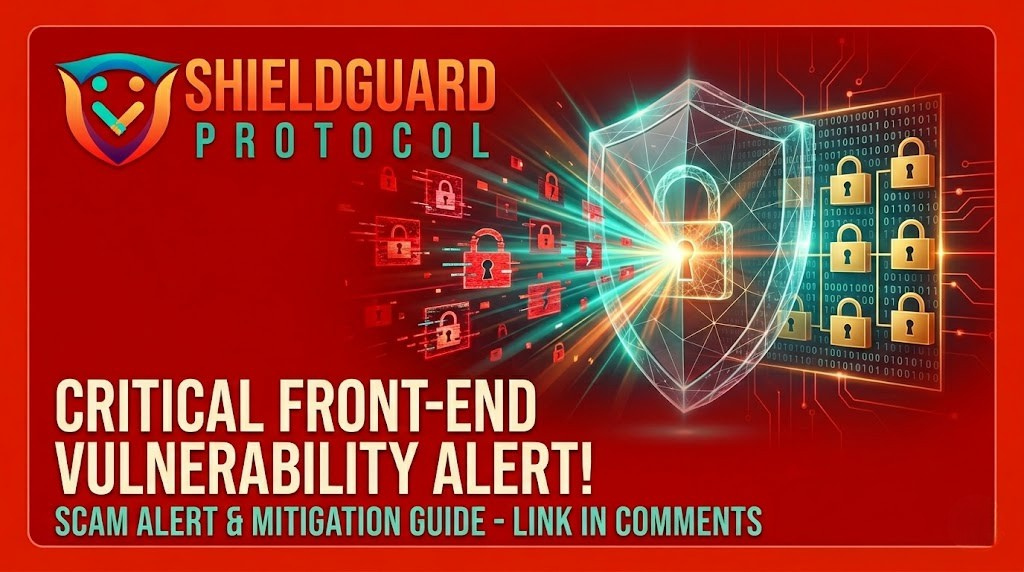
🚨 CRITICAL SECURITY ALERT: Infrastructure Supply-Chain Attacks Targeting Web3 Front-Ends (CVE-2026-41940)
A massive infrastructure-level vulnerability is currently being actively exploited across the global web-hosting landscape. Threat actors are bypassing smart contract mechanics entirely and targeting the centralized server control panels that host decentralized application (dApp) user interfaces.
A critical flaw in the widely used cPanel & WHM server management platform is allowing attackers to compromise front-end web roots. Once inside, they inject malicious code directly into decentralized exchange (DEX) swap interfaces and bridging portals.
Because this attack occurs completely outside the blockchain—modifying the visual interface you see in your browser—even an flawlessly audited smart contract will not protect you from a compromised front-end. ShieldGuard Learn has issued an immediate, high-severity warning for all users interacting with cross-chain and token swap mechanisms.
🔍 Anatomy of the Attack: The CVE-2026-41940 Infrastructure Exploit
The threat vector relies on a critical authentication bypass vulnerability (boasting a near-maximum severity rating of CVSS 9.8).
1. The Entry Vector (Unauthenticated Server Takeover)
The flaw stems from an improper validation sequence inside cpsrvd (the cPanel service daemon) when processing user sessions. Unauthenticated remote attackers send malicious requests containing raw carriage return/line feed (\r\n) line-break structures.
Because the server writes session files to disk before completing full cryptographic verification, the attacker successfully forces arbitrary parameters (such as user=root) directly into the active session file. Upon reload, the system elevates the attacker to full root administrator privileges with zero credentials required.
2. The Deployment of “Filemanager” and Web Shell Backdoors
Once administrative command is achieved over the hosting server, automated malware strains (predominantly deployed by an established threat collective tracked as Mr_Rot13) install a persistent Go-based backdoor codenamed Filemanager. The script locks down access by overriding system root passwords, uploading rogue SSH public keys, and ensuring long-term persistence that survives standard reboots.
3. Frontend Poisoning: Sneaky Wallet Hijacking
Instead of running loud ransomware or stealing hosting data, the hackers quietly search the server directories for Web3 interface files—specifically looking for JavaScript bundles corresponding to swap front-ends and liquidity bridges.
- The attackers inject stealthy script hooks into the dApp’s connection scripts.
- When a retail user navigates to the compromised swap webpage and hits “Connect Wallet,” the injected JavaScript alters the parameters of the smart contract call.
- While the screen visually claims you are swapping a minor asset, the underlying payload requests a blanket approval signature (
approve) for all the high-value tokens in your wallet, routing them straight to an attacker-controlled address.
⚠️ Emergency Advisory: Avoid Mid-Tier Protocols Completely
Because a single cPanel server often aggregates and hosts dozens to hundreds of completely unrelated websites simultaneously, this exploit acts as a massive supply-chain multiplier. If a hosting provider fails to patch their infrastructure, every single dApp hosted on that cluster is exposed to front-end poisoning.
🛑 Critical Directives for Users
- Completely Suspend Use of Mid-Tier and Low-Tier DeFi Platforms: Smaller, mid-tier, and newer utility protocols often run their web applications on standard shared cPanel hosting architectures managed by external web agencies. These setups do not maintain the rigorous, isolated, multi-signature CI/CD front-end deployment loops that top-tier platforms use. Avoid them for all swap and bridging activities until this infrastructure patching cycle settles globally.
- Do Not Trust Web UI Confirmations: Do not assume a transaction is safe because the dApp website displays a familiar layout or a clean conversion rate. The web browser UI is entirely under the control of the compromised server.
- Enforce Strict Hardware Ledger Verification: The only line of defense against a poisoned front-end is the physical screen of your hardware wallet (Ledger, Trezor, Keystone, etc.). Before clicking “Confirm” on any transaction:
- Verify the exact Contract Address on your physical device screen.
- Read the absolute Function Name (ensure it says
SwaporTransfer, and look closely if it requests a suspicious globalApprovefunction).
🛠️ Mitigation Blueprint for Web3 Project Developers
If your project utilizes any public-facing cPanel, WHM, or WP Squared control structures, your perimeter is actively at risk. Take these steps immediately:
- Deploy Emergency Patches: Upgrade your cPanel/WHM architecture immediately to the verified fixed versions (
11.110.0.97,11.118.0.63,11.126.0.54,11.132.0.29,11.134.0.20, or11.136.0.5and above). Restating thecpsrvddaemon is required to apply the patch. - Audit Session Artifacts: Hunt through your system directories for unexpected multi-line configurations inside your active tracking paths (specifically examining
/var/cpanel/sessions/raw/for unauthorizeduser=rootinjections). - Transition to Decentralized Front-Ends: To eliminate hosting panels as a single point of failure, migrate production dApp interfaces onto decentralized content delivery networks like IPFS (InterPlanetary File System) or Arweave, paired with decentralized DNS management.