Report: The Matcha Meta / SwapNet Exploit ($17M Loss)
Category: ShieldGuard Learn / Scam Prevention & Education
Urgency: 🔴 Critical (Immediate Revocation Required)
Executive Summary
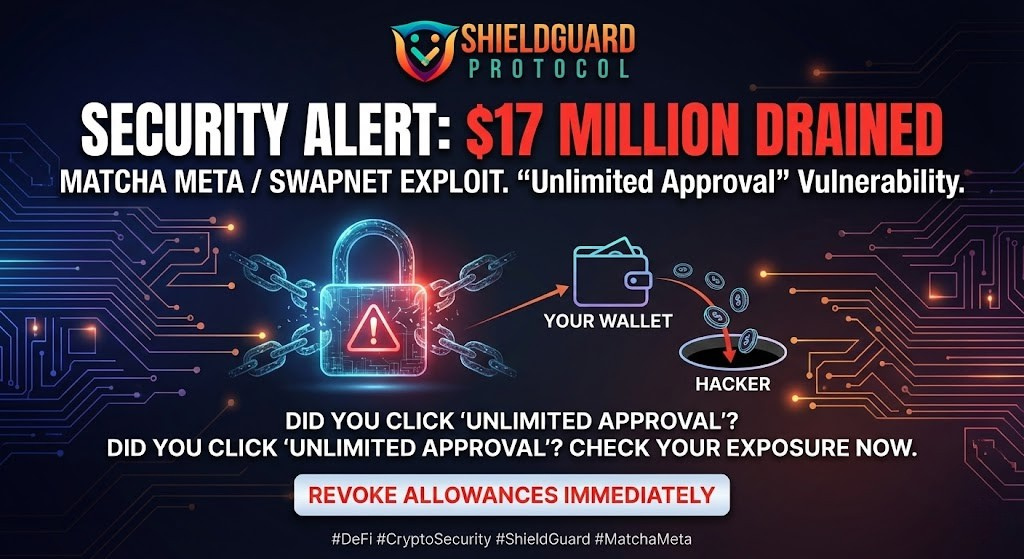
On January 26, 2026, the DeFi ecosystem suffered a significant security breach involving Matcha Meta, a popular decentralized exchange aggregator. The attack resulted in the theft of approximately $16.8 million in user assets.
Crucially, the vulnerability was not in Matcha’s core settlement code (0x protocol) but in an integrated third-party liquidity source called SwapNet. This incident highlights a specific and often overlooked DeFi risk: Infinite Approvals to third-party routers.
1. The Incident: What Happened?
- The Target: Users of the Matcha Meta aggregator who had their trades routed through SwapNet.
- The Loss: ~$17 Million in various assets (USDC, ETH, and others).
- The Timeline: The attack began early morning on January 26 (approx. 04:41 AM London Time), causing a rapid drain of wallets that had open allowances to the SwapNet contract.
- The Response: The SwapNet team has paused their contract, but funds already drained are currently unrecovered.
2. The Mechanic: “The Silent Allowance”
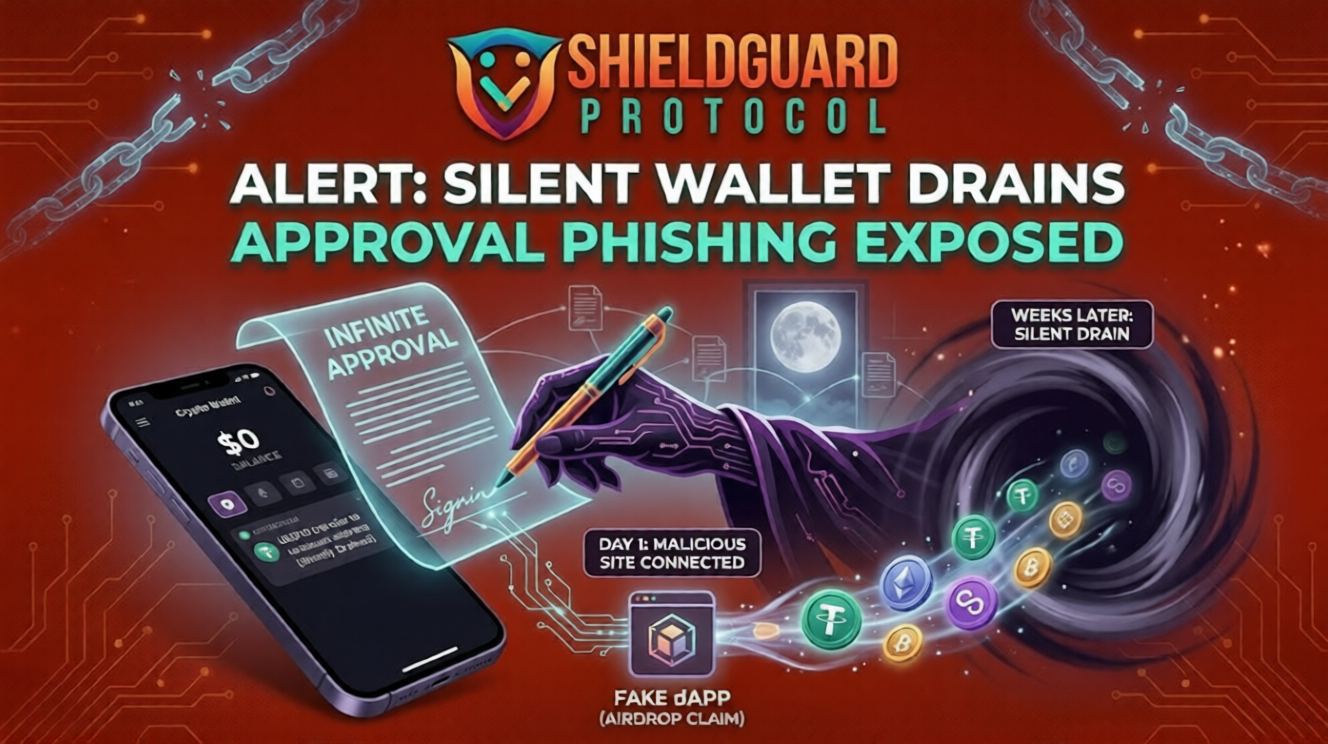
This hack exploited a common user behavior: granting “Unlimited Approvals” to save on gas fees.
When you trade on a DEX aggregator, you often approve a specific contract to spend your tokens. To avoid paying gas for every future trade, many users (and protocols) set this approval to “Unlimited.”
- The Vulnerability: Hackers gained control of the SwapNet Router Contract.
- The Exploit: Because users had granted “Unlimited Approval” to this specific router in the past, the hackers could use the compromised contract to transfer tokens out of users’ wallets without needing a new signature or transaction from the victim.
Note: Users who used Matcha Meta but disabled “One-Time Approvals” (opting for infinite) were the primary victims.
3. Immediate Action Plan: Am I At Risk?
If you have ever traded on Matcha Meta, you must check your allowances immediately.
Step 1: Check Revocation Tools
Go to a trusted allowance checker such as Revoke.cash or Etherscan’s Token Approval tool.
Step 2: Search for “SwapNet”
Connect your wallet and search for any active approvals for:
SwapNet RouterMatcha Meta Aggregator(specifically looking for the SwapNet contract address).
Step 3: Revoke Instantly
If you see an approval (especially an “Unlimited” one), click Revoke. You will pay a small gas fee, but this disconnects the compromised contract from your wallet.
4. Preventive Education: The Danger of Composable DeFi
This incident teaches a vital lesson about DeFi Composability. Aggregators like Matcha Meta work by connecting to dozens of other protocols (like SwapNet, Uniswap, Curve) to find you the best price.
The Risk: When you use an aggregator, you are essentially trusting the security of every single integrated protocol that you interact with. If one small integration (like SwapNet) breaks, it can jeopardize funds even if the main platform (Matcha) is secure.
ShieldGuard’s Golden Rules for Approvals:
- Use “Exact Amount” Approvals: Never grant “Unlimited” approvals unless absolutely necessary. Most modern wallets allow you to edit the approval amount to match your exact trade size.
- Regular “Hygiene” Days: Once a month, use a revocation tool to remove approvals for protocols you are no longer using.
- Isolate Your Wallets: Keep your long-term “HODL” stack in a cold wallet that never interacts with smart contracts. Use a separate “Burner Wallet” for daily DeFi trading.
Conclusion
The Matcha Meta / SwapNet hack is a painful reminder that in DeFi, “Approved” equals “Accessible.” If a contract is approved to spend your money, and that contract gets hacked, your money is gone.
Revoke. Verify. Stay Safe.