 Scam Alert: The “Human Hack” & The Illusion of Security
 Scam Alert: The “Human Hack” & The Illusion of Security
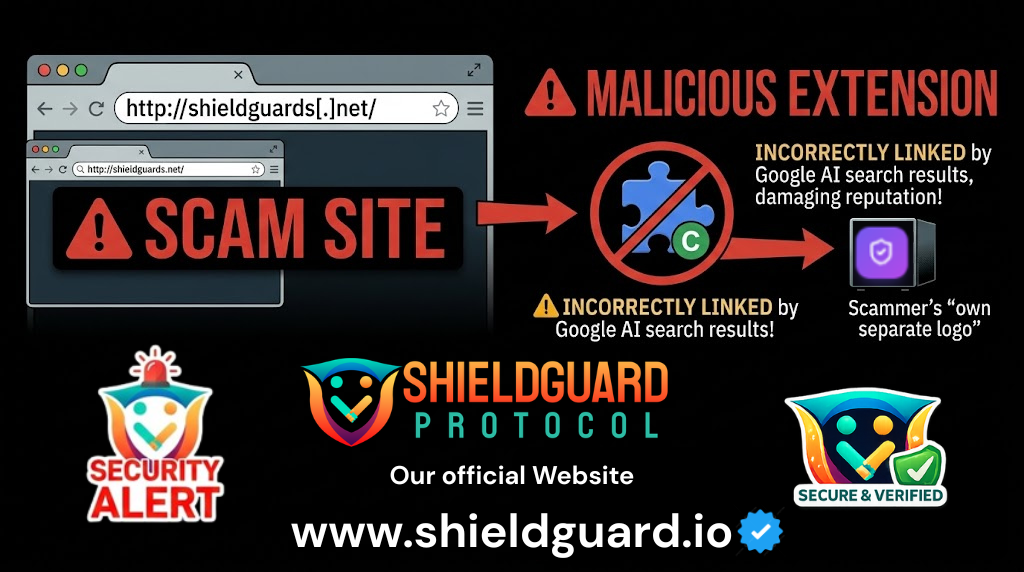
The Incident: Recent reports from Okta Threat Intelligence (March 17, 2026) have highlighted a malicious browser extension operating under the name “ShieldGuard.” While this is a separate entity with its own branding, its presence has caused significant confusion in automated search AI, which is currently misattributing this malware’s actions to legitimate projects in the security space.
The “Human Hack”: How Greed Bypasses Research
The success of this malware didn’t come from a technical exploit, but from a behavioral one. The creators relied on a tactic we call the “Human Hack.”
- The Greed Trap: By offering a “Free Airdrop” and rewards for early adoption, the project incentivized users to skip the most important step: Due Diligence.
- The Illusion of Activity: The site used marketing slogans and Telegram “social proof” to appear busy, but a closer look reveals a total lack of technical substance, verified documentation, or a transparent team.
- The “One-Click” Solution: Scammers bank on users wanting a “magic button” (a browser extension) to solve their security problems.
Red Flag Analysis: Spotting a “Hollow” Project
 Red Flag Analysis: Spotting a “Hollow” Project
If a user looks past the “Free Airdrop” banners, the signs of a scam site are usually obvious:
- Empty Documentation: Legitimate protocols provide deep technical whitepapers. Scam sites provide only marketing “fluff.”
- Anonymous/Fresh Infrastructure: These sites often appear out of nowhere with no history in the developer community.
- Permissions Abuse: Any tool asking for “Read and change all your data” to give you a “free reward” is a massive red flag.
The Definitive Distinction
ShieldGuard Protocol is a web-based educational and security ecosystem. We do not offer a browser extension, nor do we use “Airdrop” lures to drive adoption. We believe that true security comes from Research and Literacy, not from installing unverified plugins in exchange for rewards.