🛑 SCAM REPORT: Fraudulent Trading Platforms & The Pig Butchering Trap
ShieldGuard Learn > Scam Prevention and Education
The Fraudulent Trading Platform scam is one of the most financially devastating types of crypto fraud, often resulting in losses exceeding all other scam types. These platforms are typically tied to “Pig Butchering” (Romance Confidence) scams, where trust is built over weeks or months before the victim is persuaded to deposit funds into the scammer’s fake trading site.
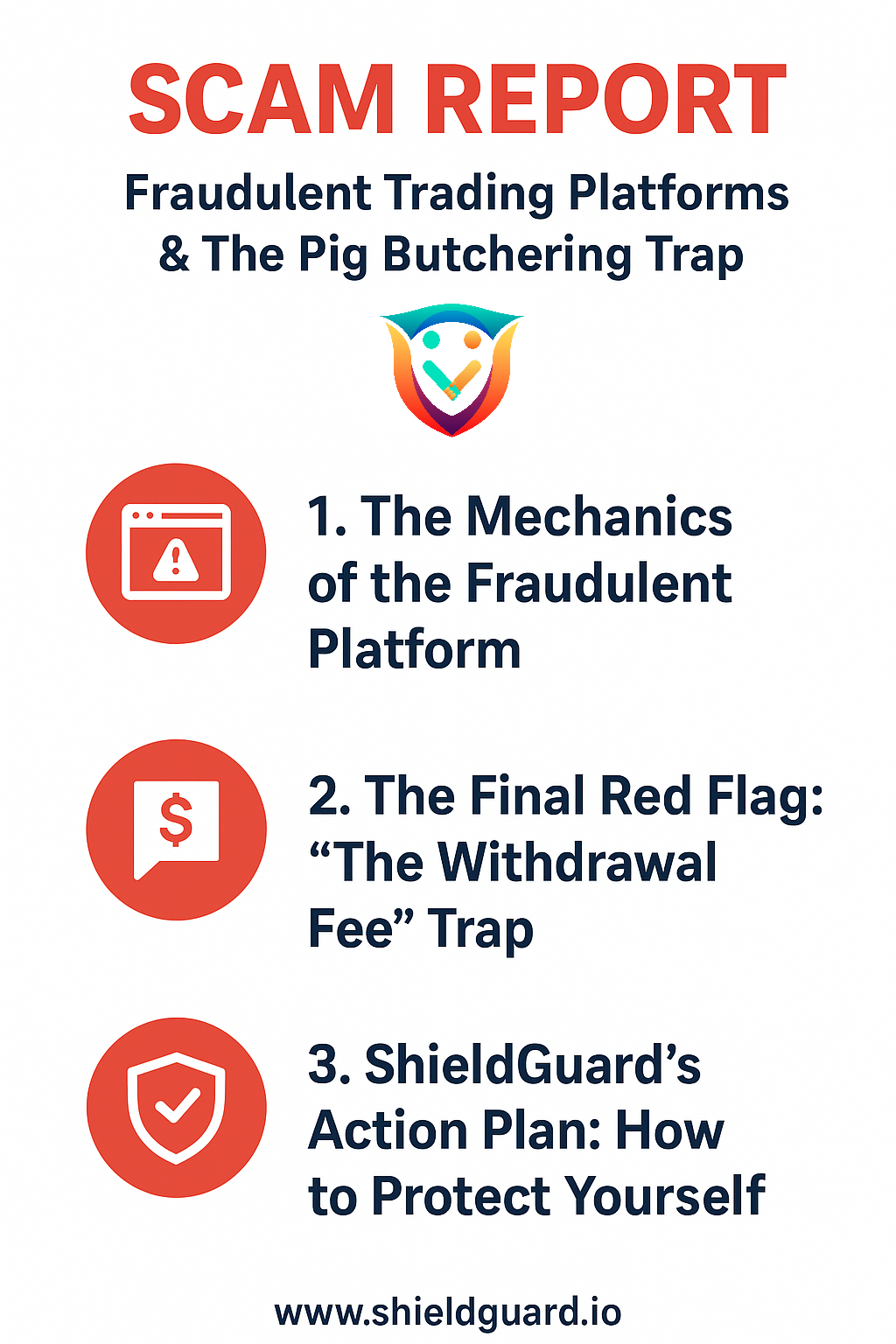
1. The Mechanics of the Fraudulent Platform
These scams operate as meticulously designed digital confidence tricks, stealing millions while appearing legitimate.
- Imposter Websites: The fraudulent sites often mimic legitimate financial firms by name, appearance, and use of industry jargon (e.g., “AI trading,” “node investing”). They may even be named to sound similar to a real, licensed entity.
- The Fake Profits Hook: The platform’s interface is entirely fabricated. It displays fictitious investment gains and impressive, guaranteed returns (sometimes up to 300%). The scammer encourages the victim to test the platform with a small deposit and allows them to successfully withdraw a small “profit” to build immense trust and encourage a larger investment.
- The Disappearing Act (The Collapse): When the victim attempts to withdraw a large sum, the account is suddenly locked, frozen, or closed. The scammer (who posed as a friend/romantic interest) disappears, and the fraudulent website often shuts down.
2. The Final Red Flag: The “Withdrawal Fee” Trap
This is the ultimate sign of a fraudulent platform. Once a victim requests a withdrawal, the platform demands additional, invented payments before any funds can be released:
- “Taxes” or “Fees”: Victims are told they must pay a 10% “trading fee,” “tax,” or “security deposit” on their fictional profits to unlock the withdrawal.
- Refusal to Deduct: The platform claims it is unable to deduct the fee from the on-screen “profit,” forcing the victim to transfer fresh capital from an external, legitimate account.
- The Vicious Cycle: If the victim pays this fee, another, larger fee is immediately invented, perpetuating a cycle until the victim realizes the total loss.
3. ShieldGuard’s Action Plan: How to Protect Yourself
This category of scam relies on establishing trust and using pressure tactics. Follow these essential steps to protect your assets:
- Verify Credentials: NEVER invest based on an unsolicited offer. Before transferring funds, verify the company’s registration and license with official regulatory bodies like the DFPI, the SEC, or the equivalent financial regulator in your region.
- Search for Warnings: Use search engines to look up the platform or coin name along with keywords like “scam,” “review,” or “warning”. Be wary of overly positive reviews that lack detail.
- Reject Coaching: Be suspicious if an “advisor” or “coach” instructs you on how to talk to your bank to evade fraud protection measures. Legitimate advisors do not tell you to lie to your financial institution.
- Check Documentation: Legitimate crypto projects must have proper supporting documentation, such as a Whitepaper. If the documents are poorly written, vague, or non-existent, treat it as a massive red flag.
- The “Too Good to be True” Rule: Any investment that promises guaranteed, high, quick returns (e.g., 50% in two months or 300% total) is almost certainly a scam, as all crypto assets carry risk and volatility.