🛡️ ShieldGuard Learn — Security Guideline
Protecting Yourself from Malicious Token Scams & Dusting Attacks
Context
In the Web3 space, a new and dangerous scam involves attackers sending small, unwanted amounts of tokens (often called “dust”) to your wallet. These aren’t just annoying; they can be highly malicious. Simply interacting with such tokens, or worse, granting them an “approval” can give scammers access to your wallet, allowing them to drain your legitimate assets.1 They achieve this by embedding malicious code in the token contract or leveraging broad token allowances you might unknowingly grant.
This report outlines how to identify and prevent these insidious attacks, ensuring your wallet remains secure.
🔒 ShieldGuard Malicious Token Security Guidelines
Follow these mandatory security practices to protect your crypto assets:
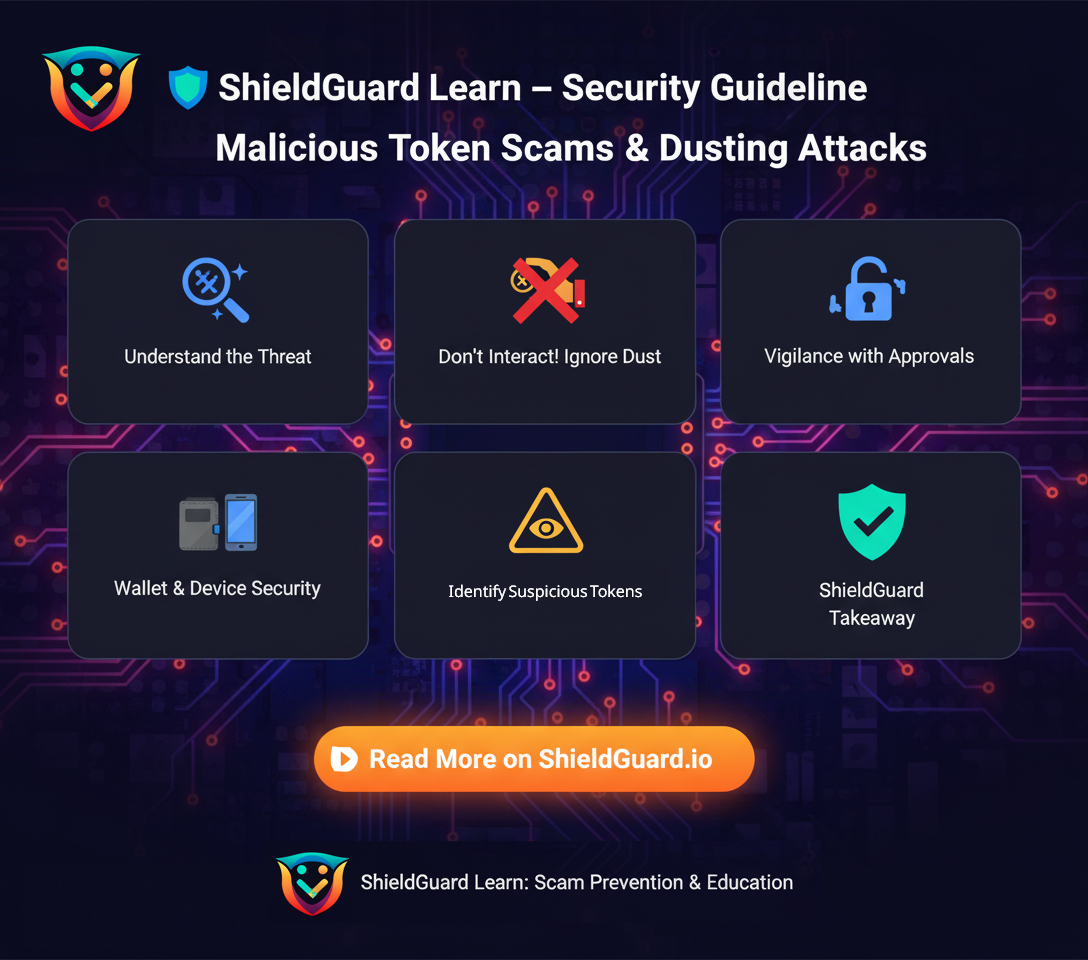
1. Understand the Threat: What Are Malicious Tokens?
- Dusting Attacks: Attackers send tiny amounts of tokens to thousands of wallets. The goal isn’t the dust itself, but to identify active wallets or create an opportunity for interaction.
- Malicious Contracts: Some tokens are designed with backdoors or exploits. Interacting with them (e.g., trying to swap, sell, or even just approving them) can trigger the malicious code.
- Broad Approvals: When you approve a token for spending by a dApp, you might unknowingly grant permission for an unlimited amount.2 If that token or the dApp becomes compromised, your funds are at risk.
2. Golden Rule: Do NOT Interact with Unknown Tokens!
- Ignore the Dust: If you receive small amounts of unexpected tokens (especially unknown or meme coins) in your wallet, DO NOT INTERACT WITH THEM.3 Do not attempt to sell, swap, or move them.
- Leave Them Alone: The safest action is to simply leave these tokens untouched. They are usually harmless as long as you don’t approve their contract or initiate a transaction with them.
- Hide, Don’t Interact: Most wallets allow you to “hide” or “disable” display for unwanted tokens. Use this feature instead of trying to move or sell them.
3. Vigilance with Token Approvals
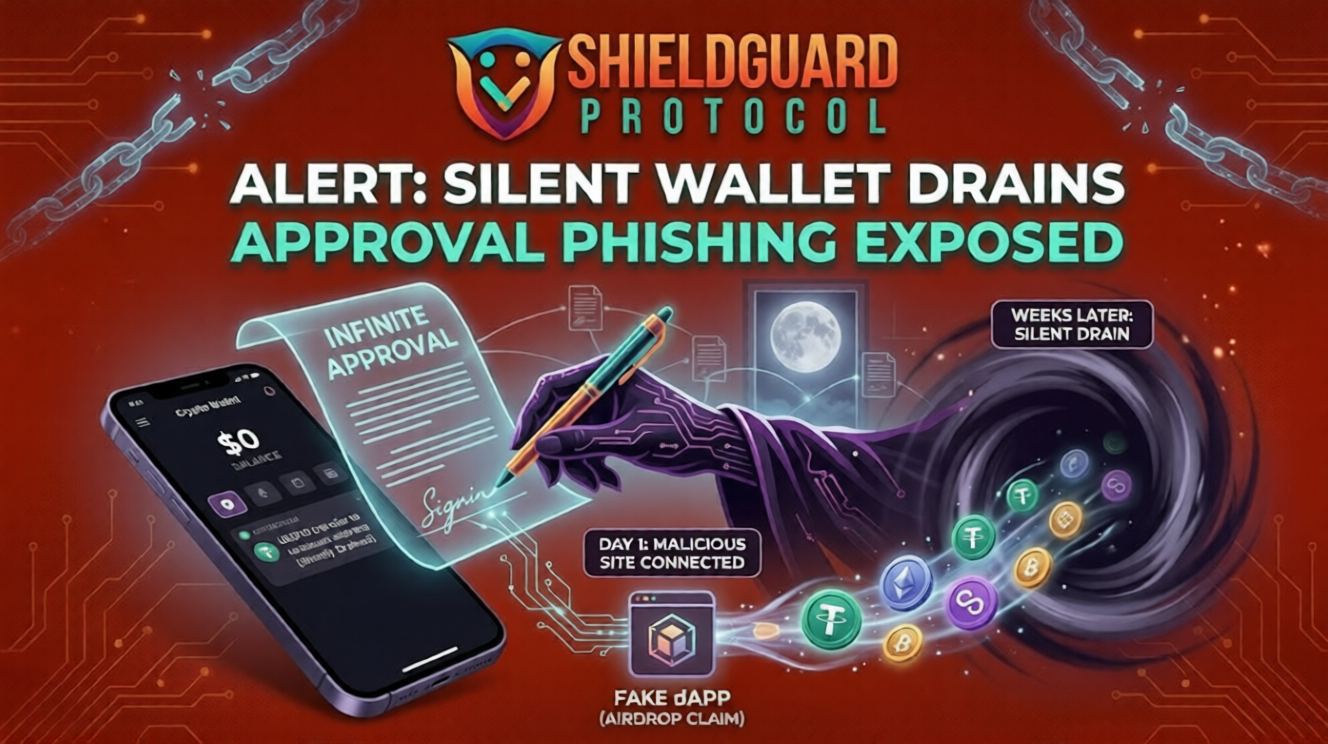
- Understand Approvals: When you use a dApp (like a DEX or NFT marketplace), you often grant it permission to “spend” your tokens on your behalf.4 This is called a “token approval” or “allowance.”
- Never Grant “Unlimited” Approvals: Always scrutinize approval requests. If possible, set a specific, limited amount for the dApp to spend rather than an “unlimited” approval.
- Regularly Revoke Unused Approvals: This is paramount! Over time, you accumulate many token approvals. Regularly review and revoke any old, unused, or suspicious approvals.
Recommended Tools: Use trusted tools like Revoke.cash or Rabby Wallet’s batch revoke feature to see and revoke your approvals.5 (As previously discussed in our “Revoking Approvals” guideline).
4. Wallet & Device Security
- Hardware Wallets (Cold Storage): For your significant holdings, use a hardware wallet. Even if you accidentally interact with a malicious token on a hot wallet, your hardware wallet funds remain isolated.
- Dedicated Wallet for dApps: Use a separate “burner” hot wallet for interacting with new or less-trusted dApps, keeping minimal funds on it.
- Software Updates: Keep your wallet apps, browser extensions, and operating systems updated to patch known vulnerabilities.7
5. Identify Suspicious Tokens
- Research: If you see an unfamiliar token, research it thoroughly before any interaction. Check reputable sites like CoinGecko, CoinMarketCap, or Block Explorers (Etherscan, BscScan).
- Red Flags: Be wary of tokens with:
- Extremely high returns promised.
- No clear project website or whitepaper.
- Spelling errors or unprofessional branding.
- Unusually large, sudden price movements without news.
6. ShieldGuard Critical Recommendation
- Assume Malicious Intent: Treat any unsolicited token in your wallet as potentially malicious until proven otherwise (and even then, avoid direct interaction).
- Proactive Approval Management: Make reviewing and revoking token approvals a regular, non-negotiable part of your crypto security routine.
- Isolate Funds: Never keep all your funds in one hot wallet, especially if you actively engage with new dApps or frequently receive dust.
⚠️ Final Note
The anonymity of blockchain allows scammers to deploy sophisticated traps. Your vigilance and disciplined security habits are the ultimate defense. Ignorance and interaction with malicious tokens can lead to irreversible loss.
This guideline is prepared under ShieldGuard Learn: Scam Prevention & Education and ShieldGuard Protection Fore more security guidelines, View ShieldGuard Protection