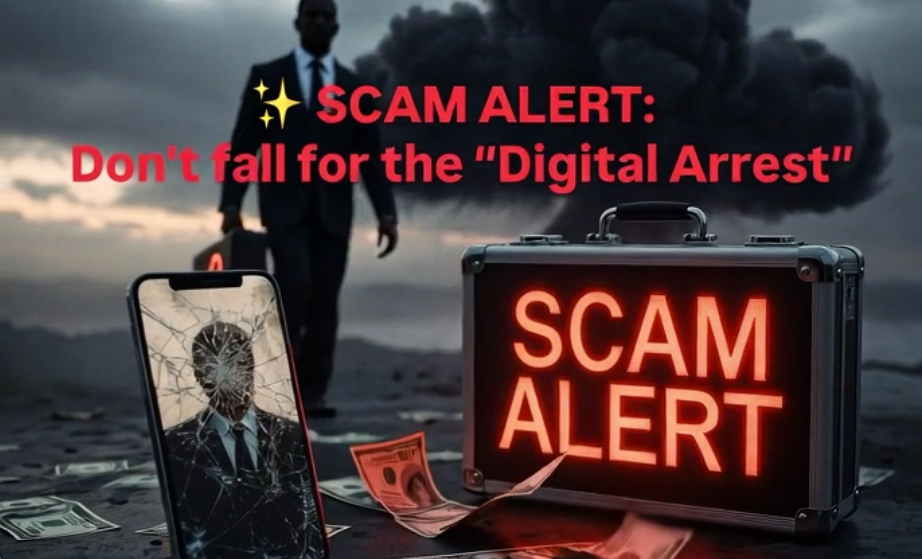
SCAM ALERT Urgent: Federal Warning on Law Enforcement Impersonation & “Digital Arrest”
Risk Level: Critical (High Financial Impact)
1. Incident Overview
On January 27, 2026, federal authorities and the FBI issued an urgent warning regarding a sophisticated surge in Law Enforcement Impersonation Scams. Fraudsters are posing as federal prosecutors, sheriff’s deputies, and investigators to coerce individuals into transferring their digital assets to “government-controlled” wallets under the guise of “securing” them during a legal investigation.
2. The Modus Operandi: How the Scam Works
This scam often utilizes a tactic known as “Digital Arrest.” Here is the step-by-step breakdown of how these criminals operate:
- The Initial Contact: You receive a call, WhatsApp message, or email from someone claiming to be a high-ranking official. To gain trust, they may provide “official” employee ID numbers and use ID Spoofing to make their phone number appear as though it is coming from a local courthouse or police station.
- The Psychological Hook: The scammer claims there is an active warrant for your arrest due to “money laundering,” “drug trafficking,” or “missed jury duty.” They use high-pressure tactics to ensure you do not hang up or consult family members.
- The “Secure Asset” Trap: The fraudster informs you that your bank accounts and crypto wallets are “tainted” and will be frozen. To “protect” your funds during the investigation, they instruct you to move your cryptocurrency to a “Safe Government Wallet” or a “Government-Vetted Escrow Account.”
- The Disappearance: Once the transfer is made, the scammers vanish. Because blockchain transactions are immutable, these funds are nearly impossible to recover once they reach the criminal’s wallet.
3. Red Flags: How to Identify the Fraud
The ShieldGuard Protocol team reminds our community that legitimate authorities will NEVER do the following:
- Demand Payment in Crypto: No government agency (FBI, DOJ, SEC, or local police) will ever ask you to pay a fine or “secure” assets using Bitcoin, Ethereum, or Stablecoins.
- Threaten Immediate Arrest over the Phone: Real law enforcement will not call you to “negotiate” an arrest warrant for a fee.
- Request Personal Keys or Seed Phrases: Never share your private keys or transfer funds to a wallet address provided over a call.
- Enforce “Digital Isolation”: Scammers often demand you stay on a video call (like WhatsApp or Zoom) for hours, preventing you from speaking to anyone else. This is a tactic to maintain psychological control.
4. Preventive Education: The ShieldGuard Checklist
To protect your portfolio and personal safety, follow these mandatory security guidelines:
- Verify Independently: If you receive a suspicious call, hang up immediately. Look up the official number of the agency mentioned (using a trusted government .gov website) and call them back directly to verify the claim.
- Never “Click and Connect”: Do not click links in unsolicited emails or texts claiming to be “official court summons” or “legal notices.” These are often phishing attempts to drain your wallet.
- Use ShieldGuard Community Intel: Share any suspicious wallet addresses or contact numbers with the ShieldGuard community. Our Presale Intel and Learn modules are updated in real-time to flag these threats.
- Report Fraud: If you have been targeted, immediately file a report at the FBI’s Internet Crime Complaint Center (ic3.gov) and notify the ShieldGuard security team.
5. ShieldLabs Perspective: Technical Safety
Our internal development team at ShieldLabs emphasizes that “Government Wallets” for public asset transfers do not exist in the manner these scammers describe. Legitimate asset seizures involve formal legal documentation and court orders served in person, not a QR code sent over a messaging app.
Your Security is Our Protocol. Stay vigilant. Stay protected. Stay with ShieldGuard.
ShieldGuard Protocol ($SHPRO) www.ShieldGuard.io | contact@shieldguard.io